
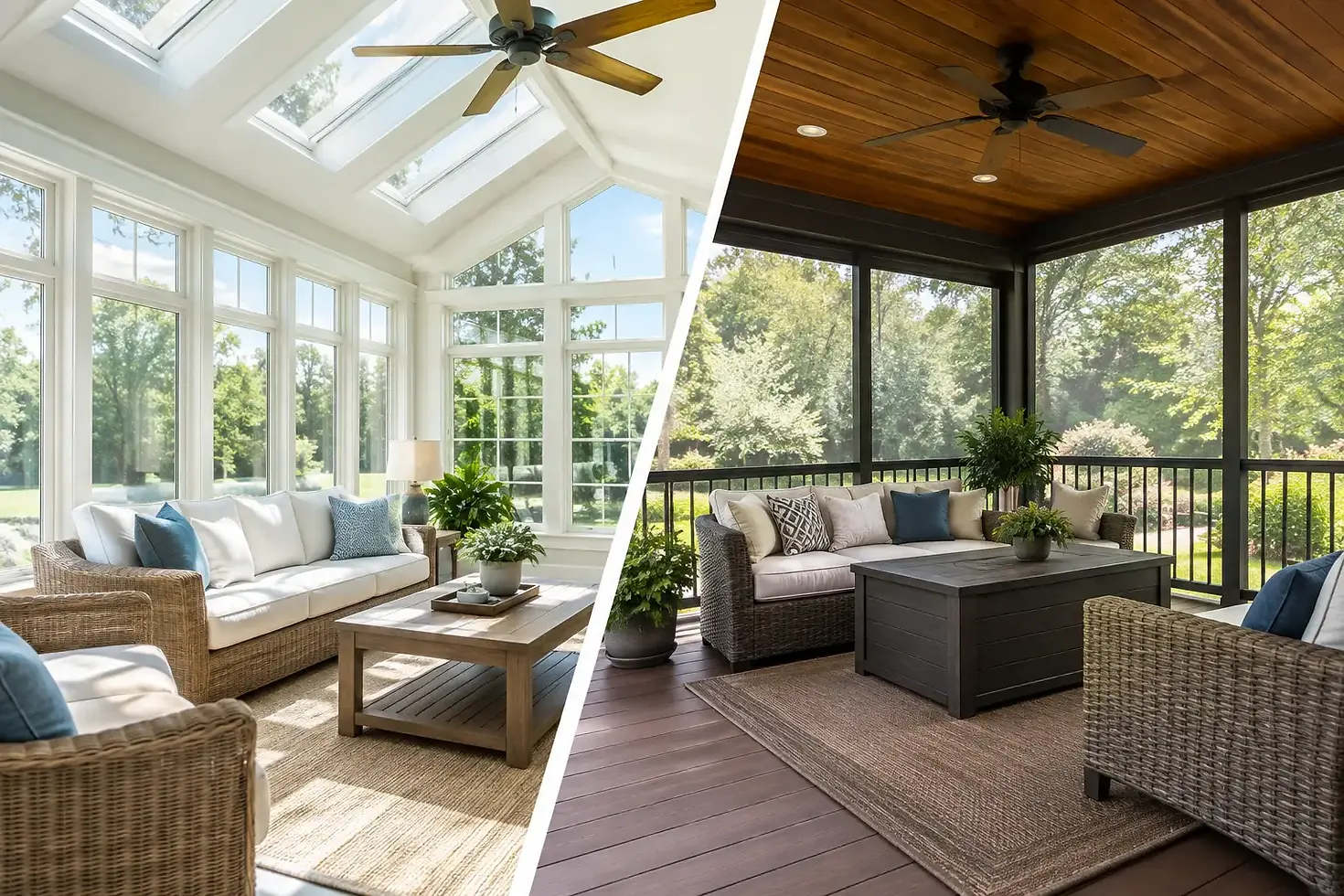
Sunroom Versus Screened Porch: Which Fits?
A porch can be perfect on a mild spring evening, then become too hot, too damp, or too buggy to enjoy when the weather changes. That is why the sunroom versus screened porch decision comes down to more than appearance. It is about how often you want to use the space, what your home can support, and what will make life more comfortable in Tennessee, Georgia, or Alabama.
Both options can add useful outdoor living space and improve the way your home feels. The right choice depends on your budget, your property, and whether you want an open-air retreat or a more protected extension of your home.
Sunroom versus screened porch: the core difference
A screened porch is typically a covered outdoor structure with screen panels instead of solid walls. It lets in fresh air, natural sounds, and the feeling of being outside while helping keep mosquitoes, leaves, and other pests out. It is usually not heated or cooled, so its comfort depends heavily on the season and local weather.
A sunroom is a more enclosed addition, usually built with insulated walls, extensive windows, and a solid roof system. Some sunrooms are designed for three-season use, while a fully insulated and climate-controlled four-season sunroom can be used year-round. It provides more separation from rain, pollen, humidity, and temperature swings.
The distinction matters because these projects are built differently. A screened porch may be a simpler exterior upgrade. A sunroom can involve a more substantial foundation, insulation, electrical work, HVAC planning, windows, permits, and integration with the existing house.
When a screened porch makes the most sense
A screened porch is often the better fit for homeowners who want an outdoor space without the expense of a fully enclosed addition. It creates a comfortable place for morning coffee, family meals, reading, or gathering with friends when the weather is pleasant.
For many Southern homes, a screened porch is especially valuable because it gives you shade and airflow while keeping bugs at a distance. Ceiling fans can make a noticeable difference during warmer months, and durable screening can help the space stand up to regular use.
This option may be right for you if you enjoy being outdoors and do not need the room to function in winter or during heavy rain. It can also work well when you have a scenic backyard, a pool area, or a wooded property where the outdoor view is part of the appeal.
A screened porch generally has fewer finish requirements than a sunroom, but quality still matters. The framing, roof tie-in, drainage, flooring, screening system, and door placement all affect how well the porch performs over time. Poor drainage or an improperly connected roof can lead to water problems that cost far more to correct later.
Screened porch trade-offs
The biggest limitation is seasonal use. Screens block insects, not heat, humidity, wind, or blowing rain. A porch may sit unused during the coldest winter days, peak summer afternoons, or periods of high pollen.
Furniture and finishes also need to be selected carefully. Even under a roof, outdoor humidity and moisture can affect rugs, cushions, wood furniture, and electronics. Regular cleaning and occasional screen repair are part of owning the space.
When a sunroom is worth the investment
A sunroom makes sense when you want a brighter, more protected living area that feels connected to the outdoors but performs more like part of the house. It can become a breakfast room, reading room, playroom, plant room, home office, or quiet place to relax without worrying about insects or sudden rain.
For households that want to use the added space through more of the year, climate control is often the deciding factor. A four-season sunroom with proper insulation and heating and cooling can stay comfortable during humid summers and chilly winters. That versatility can make the added investment worthwhile.
Sunrooms also give homeowners more flexibility with furnishings. Because the room is enclosed, you can use many of the same materials and pieces you would consider for an interior living area. The room still needs to handle strong sunlight, so fade-resistant fabrics, suitable window treatments, and energy-efficient glass are wise choices.
The best sunroom designs respect the home’s existing architecture. Rooflines, window proportions, exterior materials, flooring transitions, and lighting should feel intentional rather than added on. A well-planned addition can look like it has always belonged to the home.
Three-season and four-season sunrooms are not the same
A three-season sunroom is enclosed but may not have the insulation, windows, and HVAC capacity needed for comfortable winter use. It offers more protection than a screened porch and can be a practical middle ground for homeowners who mainly want spring, summer, and fall use.
A four-season sunroom is designed for year-round comfort. It requires a higher level of construction planning, especially where the new room meets the existing home. The project may need an upgraded foundation, insulated framing, efficient windows, electrical outlets, lighting, and a dependable heating and cooling solution.
If you are comparing estimates, make sure you understand which type of room is being proposed. Two projects may both be called sunrooms, yet have very different construction standards, costs, and long-term comfort levels.
Cost, value, and what drives the budget
A screened porch usually costs less than a sunroom because it uses fewer enclosed, conditioned components. However, the final price still depends on the footprint, roof design, foundation needs, materials, electrical work, flooring, and site conditions.
A sunroom generally represents a larger investment. Beyond the enclosure itself, costs may include structural work, insulation, windows, HVAC, flooring, finishes, and permit requirements. Removing an existing deck, correcting drainage, or modifying a roofline can also affect the budget.
It is tempting to compare projects by square footage alone, but that can be misleading. A smaller four-season sunroom may cost more than a larger screened porch because its systems and construction requirements are more involved. The better question is what value the space will provide for your household over the next several years.
If resale is part of your thinking, quality and fit matter. An addition that complements the home, is properly permitted, and is built with lasting materials is more likely to support buyer appeal than a space that feels temporary or poorly connected.
Consider maintenance before choosing
Neither option is maintenance-free. A screened porch needs routine attention to screens, trim, gutters, flooring, and any exposed wood. Keeping nearby trees trimmed and clearing debris helps prevent moisture and pest issues.
A sunroom requires care similar to other finished areas of the home, along with regular inspection of windows, seals, roofing, and HVAC components. High-quality windows and proper installation are especially important because condensation, leaks, and unwanted heat gain can affect comfort and operating costs.
The local climate should guide material choices. In the Southeast, humidity, strong sun, heavy rain, and seasonal storms place real demands on exterior construction. A contractor should assess how water moves around your home and recommend materials suited to the exposure your addition will receive.
Questions to ask before building
Before deciding, think about how your family will actually use the space. Do you want to hear the rain and feel the breeze, or do you want a room that stays usable when the weather turns? Will it serve as occasional entertaining space, or does your home need another everyday room?
Also consider privacy, sun exposure, and access. A west-facing glass room may need thoughtful shading to stay comfortable in the afternoon. A screened porch near a busy road may benefit from design features that improve privacy. The location of doors, steps, and walkways should make the addition easy to use from both inside and outside.
Finally, ask prospective builders how they will handle permits, structural connections, drainage, electrical work, and warranty coverage. Clear answers early in the process help prevent surprises once construction begins.
A free in-home consultation with an experienced local builder can turn broad ideas into a practical plan. Tri-South Construction LLC can help homeowners weigh the layout, materials, budget, and construction details that fit their property.
The best choice is the one you will use often. If fresh air and a lower initial investment are your priorities, a screened porch may be exactly what your home needs. If you want dependable comfort and a true extension of your living space, a sunroom may earn its place every day of the year.


Comments