
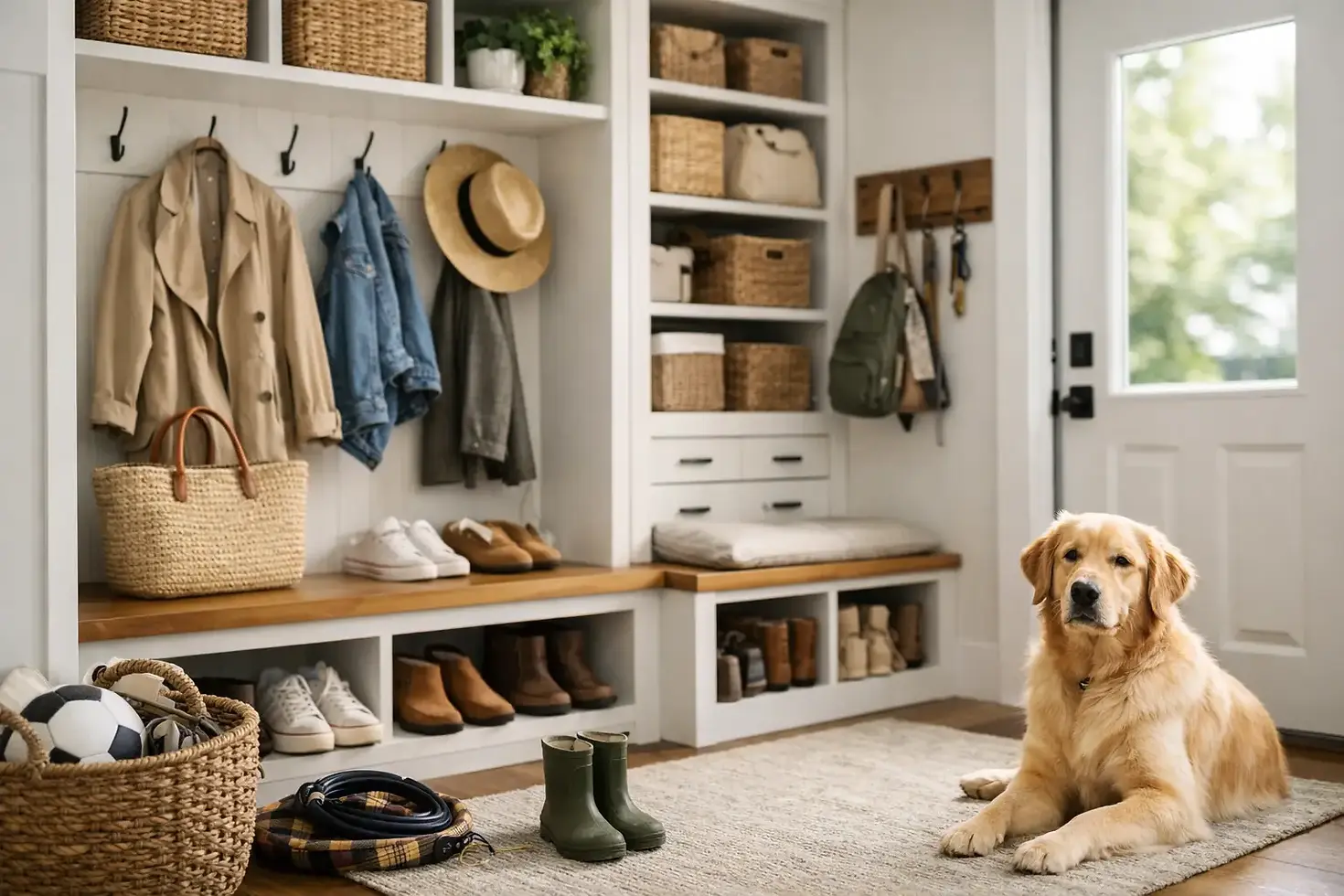
Best Mudroom Storage Solutions for Busy Homes
A wet pair of boots by the back door can turn into a pile of shoes, backpacks, dog leashes, mail, and sports gear before the day is over. For busy households across Tennessee, Georgia, and Alabama, the best mudroom storage solutions do more than make an entry look tidy. They give every family member a reliable place to drop what they carry in and pick up what they need on the way out.
A well-planned mudroom also protects the rest of the home. It keeps red clay, rainwater, pollen-covered shoes, and everyday clutter from traveling into the kitchen or living room. The right design depends on your available space, how your household comes and goes, and whether the room needs to work as a laundry area, pet station, or family command center.
Start With How Your Household Uses the Door
Before choosing cabinets or paint colors, look at the traffic pattern. Which door does the family actually use most often? What gets dropped there? A front entry that mainly receives guests needs a different setup than the door used after school, work, practice, gardening, and dog walks.
Count the people who will use the mudroom daily, then account for their gear. A family of four may need four backpack locations, four sets of everyday shoes, seasonal outerwear, umbrellas, lunchboxes, and room for visitors. If one person works outdoors or children play sports year-round, plan for muddy footwear and larger equipment instead of assuming a narrow shelf will be enough.
The most useful layouts establish a simple sequence: enter, hang, sit, store shoes, and move into the home. When these functions are in the order people naturally use them, keeping the area organized takes less effort.
Best Mudroom Storage Solutions: Build Zones, Not Just Cabinets
The strongest mudroom designs create clear zones. This keeps one storage feature from doing too many jobs and makes the room easier for children and guests to understand.
Individual lockers create ownership
Built-in lockers are one of the most effective options for active families. Each person receives a dedicated vertical section with hooks, a shelf, and lower storage. Kids are more likely to put a backpack in a space labeled with their name than on a general hallway hook.
Open lockers make daily items easy to reach and encourage quick cleanup. They work especially well for coats, bags, hats, and items that need to air out. The trade-off is visual clutter. If you prefer a cleaner look, consider cabinet doors on the upper sections or a combination of open cubbies and closed storage.
For adults, taller locker compartments can hold work bags, rain jackets, and boots. Adjustable shelves add flexibility as children grow and household needs change.
A bench makes shoe storage practical
A bench gives everyone a place to sit while removing shoes, which matters more than it may seem for young children, older adults, and anyone arriving with muddy boots. Use the space beneath it intentionally. Open cubbies are convenient for shoes used every day, while pullout drawers or baskets hide visual clutter.
A hinged bench offers generous enclosed storage for seasonal items, but it is not always the best choice for daily shoes. Frequent lifting can become inconvenient, especially when the bench top is covered with coats or bags. For most homes, a combination of open shoe cubbies and one deeper enclosed compartment offers a better balance.
Choose a durable bench finish that can stand up to wet clothes, backpack corners, and regular cleaning. A removable cushion is comfortable, but washable fabric or wipeable vinyl is often more practical than a light-colored upholstered seat.
Hooks belong at more than one height
Hooks are simple, affordable, and useful, but placement determines whether they work. Install a higher row for adult coats and a lower row for children’s jackets and bags. In a shared household, two levels reduce the temptation to throw everything over the nearest chair.
Use sturdy hardware mounted into solid backing, not just drywall. A mudroom hook may hold a heavy winter coat, a loaded backpack, or a wet towel. Quality installation prevents loose hardware and wall damage over time.
Closed cabinets control the overflow
Open storage keeps routines moving, but closed cabinets protect the room from becoming a display of everything your family owns. Tall cabinets are ideal for cleaning supplies, paper goods, extra pet food, small tools, or bulky winter accessories. They can also conceal charging stations and cords for phones, tablets, and cordless vacuums.
Reserve closed storage for items that are useful but not needed every day. This leaves the most accessible spaces available for the belongings that create the morning rush.
Choose Materials That Can Handle Southern Weather
Mudrooms work hard, particularly in areas with frequent rain, humid summers, and plenty of outdoor activity. Attractive materials are worthwhile, but durability should come first in the areas that receive the most use.
Porcelain tile and luxury vinyl flooring are dependable choices because they are easy to clean and handle moisture well. Tile is highly durable and offers a wide range of looks, though it can feel cool and hard underfoot. Luxury vinyl tends to be warmer and more forgiving, making it a good fit for a family entry. A low-profile, washable rug can add comfort without trapping dirt the way a thick rug may.
For cabinetry, painted wood or quality engineered materials can both work well when properly installed and finished. Avoid placing unprotected wood directly where wet boots, umbrellas, or pet bowls will sit. A raised cabinet base, waterproof flooring, and a small tray for wet shoes can prevent water from collecting where it does not belong.
Good lighting is another practical requirement. Overhead lighting helps with daily traffic, while lighting inside tall cabinets or under upper shelves can make early mornings and late evenings easier. If the room doubles as a laundry space, bright task lighting is particularly helpful.
Make a Small Mudroom Work Harder
You do not need a large room to gain meaningful storage. A narrow wall beside a garage entry can become a hardworking drop zone with a bench, vertical hooks, shallow upper cabinets, and a row of shoe storage below. In a tight footprint, vertical space is often more valuable than extra floor space.
Wall-mounted benches can make a compact room feel more open while leaving room below for baskets. Slim cabinets reduce the amount of space taken from a walkway, and a tall pantry-style cabinet can hold far more than several short cubbies. Pocket doors or doors that open away from the busiest path may also improve circulation when a remodel allows for them.
Avoid designing a small mudroom around oversized furniture. A deep bench and wide cabinet may look impressive on a plan but can make a daily entry frustrating. Measure the clear walking path with doors, laundry appliances, and baskets in mind.
Include a Place for the Things That Cause Clutter
The best designs anticipate the items that do not fit neatly into a standard locker. A pet station with a leash hook, food storage, towel drawer, and wash area can keep dog supplies from spreading through the kitchen. A charging drawer can prevent devices and cords from taking over the counter. A small sorting area for mail, school papers, and keys can stop paperwork from following the family into the main living space.
If your mudroom is near the laundry room, consider adding a hanging rod for damp jackets or air-drying clothes. A utility sink is useful for cleaning muddy hands, rinsing garden vegetables, washing paint brushes, or handling pet cleanup. These additions require thoughtful plumbing and electrical planning, but they can add real day-to-day value.
Built-Ins vs. Standalone Storage
Standalone benches, cabinets, and hook racks can be a good starting point when you need a quick, lower-cost update. They offer flexibility and can work well in rental properties or homes where the layout may change soon. Their limitations are usually fit, durability, and capacity. Gaps around furniture collect dust, and standard pieces often fail to use the full height or width of the wall.
Custom built-ins cost more upfront, but they can turn awkward walls, underused corners, and garage entries into purposeful storage. They also allow the design to match adjacent cabinetry, flooring, trim, and the architecture of the home. For a long-term home, that tailored fit can be worth the investment.
A professional remodel also helps address details that are easy to overlook, including wall reinforcement for hooks, electrical outlets, lighting, ventilation, flooring transitions, and moisture protection. Those details make the room more durable and easier to maintain after the project is complete.
A mudroom should not require perfect habits to stay useful. It should make the next right step obvious: shoes below, bag on the hook, coat in the locker, and keys in one dependable place. When the room is planned around your family’s real routines rather than a showroom image, it earns its place in the home every day.


Comments