
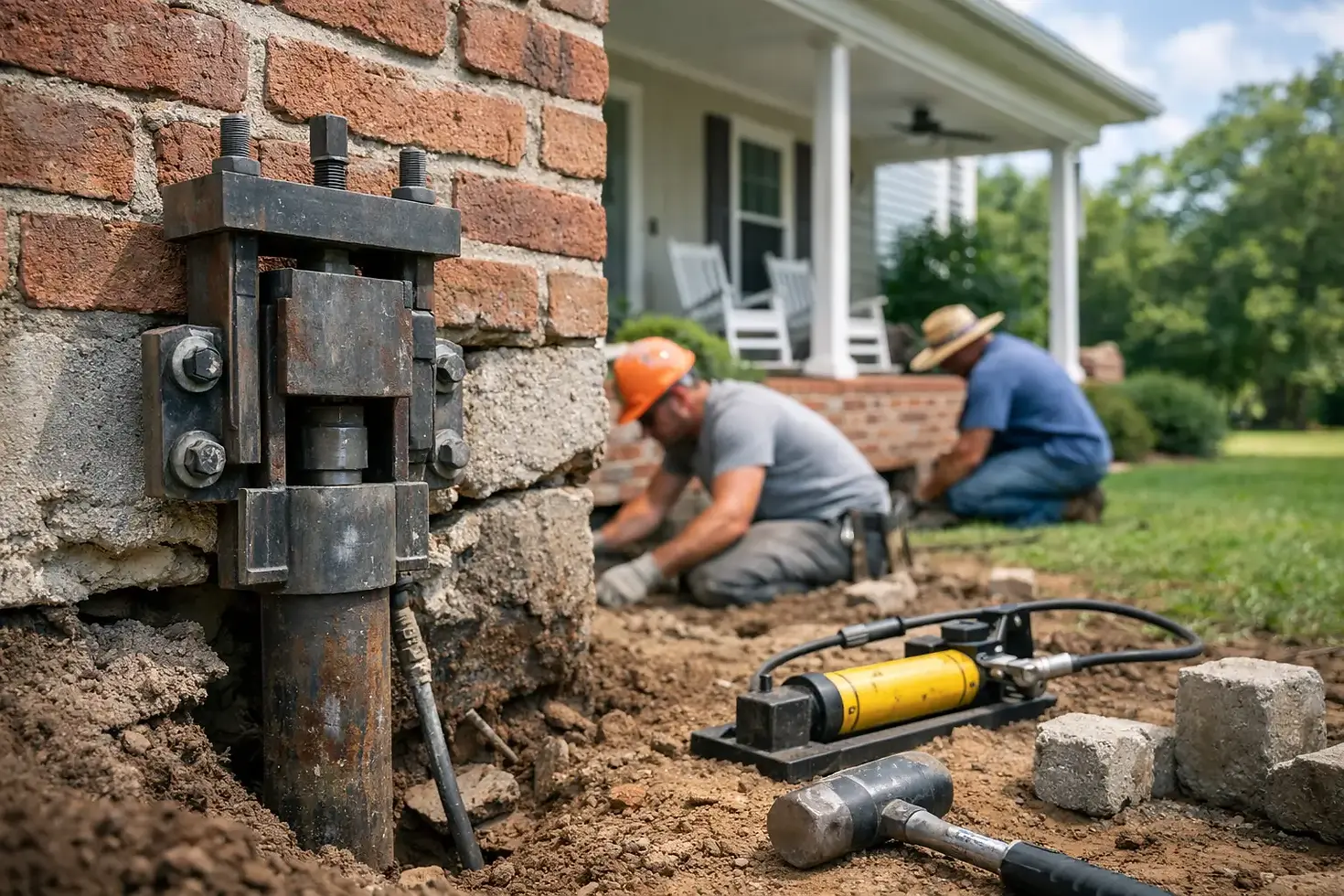
Foundation Repair Guide for Southern Homes
A small crack beside a doorway may be nothing more than normal settling. But when that crack grows, doors begin sticking, floors slope, or moisture appears where it should not, it is time to pay attention. This foundation repair guide helps Tennessee, Georgia, and Alabama property owners understand what to look for, what repairs may involve, and how to make a confident decision before a manageable issue becomes a major project.
Start With the Signs, Not Assumptions
Foundation concerns rarely announce themselves with one dramatic event. More often, homeowners notice a series of changes over time. A door that once closed easily starts rubbing the frame. New cracks appear above windows. Tile separates, trim gaps widen, or a section of flooring feels uneven underfoot.
These signs deserve an inspection, but they do not automatically mean the entire foundation is failing. Homes move for many reasons, including seasonal moisture changes, soil expansion and contraction, drainage problems, framing movement, and normal settlement. The goal is to identify the cause before choosing a repair.
Pay close attention when you see several symptoms together, especially if they are getting worse. Common warning signs include:
Stair-step cracks in brick, block, or exterior masonry
Horizontal cracks in basement or crawl space walls
Cracks wider than a hairline that continue to lengthen
Doors and windows that stick, separate from trim, or will not latch
Sloping, bouncing, or sagging floors
Gaps between walls, ceilings, cabinets, and floors
Standing water near the foundation, crawl space moisture, or persistent musty odors
A single cosmetic crack can be monitored. Multiple changes across the home call for a qualified professional to evaluate the structure and the conditions around it.
Why Foundation Problems Are Common in the Southeast
The ground beneath a house is not static. Across Tennessee, Georgia, and Alabama, many properties sit on clay-rich or mixed soils that react strongly to changes in moisture. During rainy periods, soil can absorb water and expand. During dry stretches, it can shrink and pull away from the foundation. Repeated movement places stress on concrete, masonry, footings, and supporting framing.
Poor drainage often makes this cycle worse. Roof runoff that empties beside the home, negative grading that directs water toward the structure, leaking plumbing lines, or a clogged drainage system can saturate soil in one area. That uneven moisture may allow part of the foundation to move differently than the rest.
Older homes can have additional considerations. Original construction methods, undersized supports, aging wood components in a crawl space, and years of deferred maintenance may all affect what a repair requires. Newer homes are not immune either, particularly when grading or drainage was not properly managed after construction.
What a Proper Foundation Inspection Should Cover
A dependable assessment looks beyond the visible crack. The contractor should review both the interior and exterior of the property, ask when the symptoms began, and look for patterns that point to movement, water intrusion, or structural wear.
Inside, an inspection may include floors, wall and ceiling cracks, doors, windows, cabinets, and areas where finishes are separating. Outside, the review should include masonry, concrete, gutters, downspouts, grading, drainage paths, and the condition of nearby trees or landscaping. For homes with crawl spaces or basements, the support system, beams, piers, joists, moisture level, and wall condition should also be evaluated.
Measurements matter. A professional may check floor elevations, crack widths, wall alignment, or the condition of structural members to determine whether the issue appears active. In more complex situations, an engineer may be the right resource for a detailed structural assessment and repair recommendations.
Be wary of anyone who recommends a costly solution after a quick walk around the house. Foundation work should be based on evidence, not fear. You deserve a clear explanation of what is happening, why it is happening, and what the proposed work is intended to correct.
Foundation Repair Guide: Common Repair Approaches
The right repair depends on the foundation type, the source of movement, soil conditions, water management, and the extent of the damage. There is no one-size-fits-all fix.
For a crawl space, repairs may involve adding or replacing support piers, reinforcing beams, correcting sagging floor framing, or addressing damaged joists. If moisture is contributing to the problem, the scope may also include drainage improvements, vapor barrier work, ventilation adjustments, or repair of a plumbing leak.
For settling slab foundations, a contractor may recommend piers or other stabilization methods designed to support affected areas. Concrete crack repair can help prevent water entry and improve appearance, but filling a crack alone does not solve ongoing movement. The underlying cause must be addressed first.
Basement walls can require a different approach. Horizontal cracking, bowing, or inward movement may call for reinforcement, stabilization, waterproofing, or exterior drainage work. The correct method depends on the wall material, soil pressure, moisture conditions, and severity of displacement.
Drainage improvements are sometimes the most valuable part of the project. Extending downspouts, adjusting grade, managing roof runoff, or installing a drainage solution can reduce the water conditions that caused or worsened the movement. These improvements may be paired with structural repair rather than treated as an afterthought.
Repairing the Structure vs. Repairing the Symptoms
It is understandable to want cracks patched and rooms put back to normal as quickly as possible. Still, cosmetic repair should usually come after structural and moisture issues are resolved. Repainting a cracked wall before stabilizing the cause can lead to the same crack returning a few months later.
A practical repair sequence often begins with controlling water, stabilizing the affected foundation or framing, and then completing interior or exterior restoration. That may include drywall repair, trim work, flooring repairs, masonry restoration, or repainting.
This order can feel slower, but it protects your investment. It also helps ensure that remodeling work, such as a kitchen update or room addition, is not built on an unresolved structural issue. If you are planning a major renovation, have suspected foundation concerns evaluated before finalizing the project scope.
How to Compare Foundation Repair Estimates
Foundation repair estimates can vary because contractors may be solving different problems or proposing different levels of work. The lowest number is not always the best value, and the highest number is not automatically the most thorough. Compare the details, not only the total.
A useful estimate should describe the observed conditions, the recommended repair, the materials or systems involved, the areas included, and any drainage or restoration work that is part of the scope. It should also identify what is not included. For example, a structural repair quote may not include replacing finished flooring, repairing landscaping, or correcting unrelated plumbing issues.
Ask how the contractor determined the repair plan and whether permits, engineering, inspections, or access limitations could affect the work. Confirm the anticipated schedule, payment terms, warranty details, and who will be your point of contact while the project is underway.
Licensed and insured contractors should communicate directly and avoid vague promises. At Tri-South Construction LLC, the focus is on giving property owners a clear view of the work ahead so they can make decisions with less uncertainty.
Steps You Can Take Before a Professional Visit
You do not need to diagnose the problem yourself. A few simple observations can make an inspection more productive. Note when you first noticed the issue and whether it changes after heavy rain, dry weather, or temperature shifts. Take dated photos of cracks and areas where doors, floors, or trim are changing.
Clear reasonable access to the crawl space entrance, basement walls, or areas where symptoms are visible. If you know of past water leaks, drainage work, foundation repairs, or remodeling projects, share that history. It may help explain what the contractor finds.
Avoid making major changes before the evaluation, such as covering cracks, adding fill soil against the house, or installing drainage without a plan. Temporary steps can sometimes hide useful clues or direct water somewhere else that creates a new problem.
When Waiting Is the Riskier Choice
Not every foundation concern needs immediate large-scale repair. A stable hairline crack may only need monitoring. However, waiting becomes riskier when there is active movement, worsening water intrusion, visible wall displacement, deteriorating support framing, or safety concerns around uneven floors and weakened structural areas.
Early action can preserve more repair options. It may also help prevent secondary damage to finishes, plumbing connections, flooring, windows, and exterior masonry. The best next step is not to assume the worst. It is to get a thorough, straightforward evaluation from a contractor who will explain the condition of your property in plain language and recommend work only when the evidence supports it.


Comments