
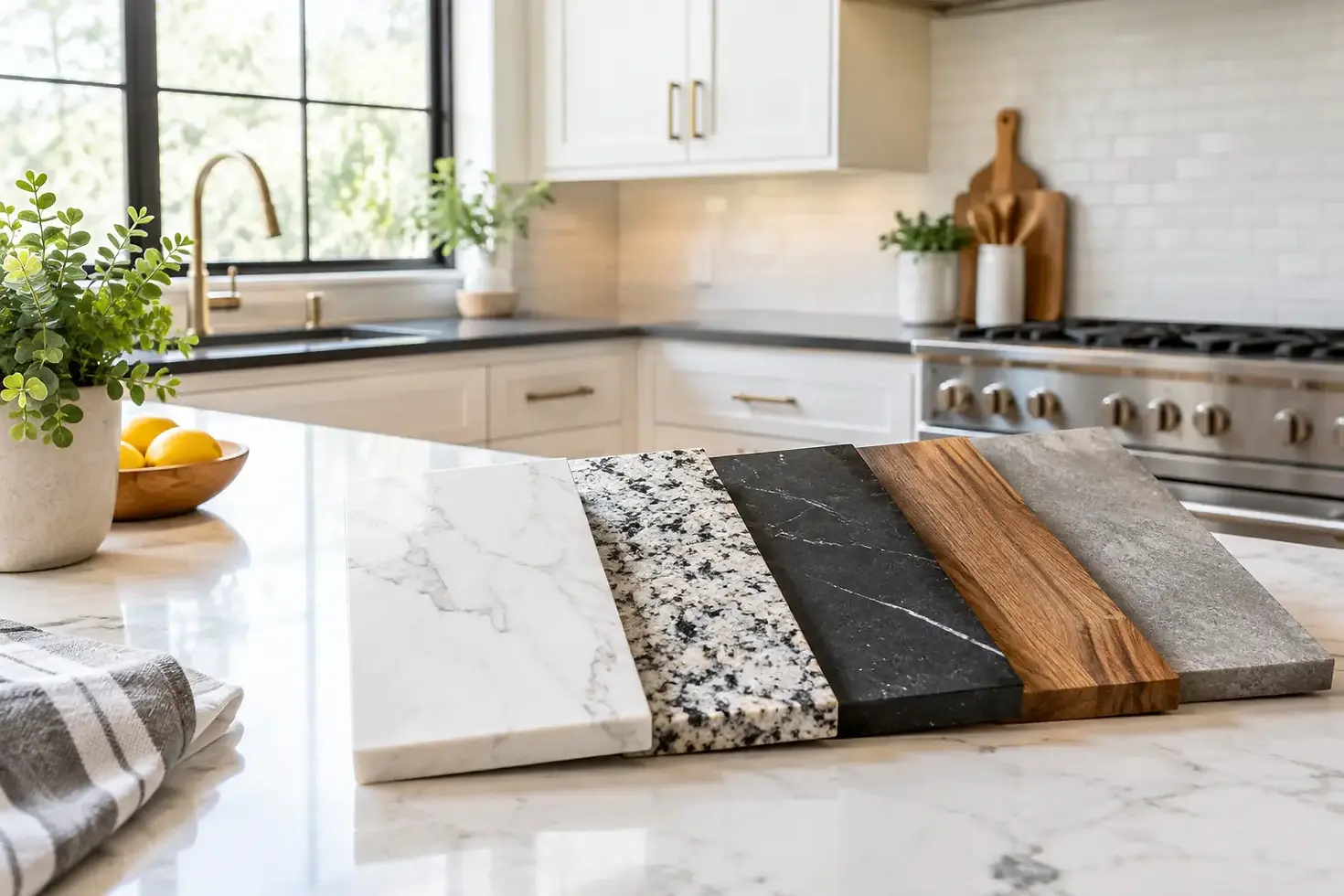
How to Choose Kitchen Countertops That Fit Your Home
A countertop can look perfect in a showroom and still be the wrong choice for the way your household uses the kitchen. When homeowners ask how to choose kitchen countertops, the best answer starts with daily life: the meals you cook, the cleanup you can realistically keep up with, the amount of natural light in the room, and the budget for the complete remodel.
Countertops are one of the most visible and heavily used parts of a kitchen. They influence how the room functions, how it feels, and how well it holds up over time. Choosing well means looking beyond a sample’s color and understanding the practical trade-offs before installation day.
Start With How Your Kitchen Works
Think honestly about what happens in your kitchen during a normal week. A household that cooks most nights, hosts family gatherings, and has children doing homework at the island needs a different surface than a low-traffic kitchen used mainly for coffee and simple meals.
If you regularly set down hot pans, chop ingredients, or prepare food with acidic items such as tomatoes, lemons, and vinegar, prioritize a material that can handle that routine. If you want a surface that requires little ongoing attention, maintenance should carry more weight than the look of a natural slab. There is no single best countertop for every home. The right choice is the one that fits your habits without becoming another item on your to-do list.
Also consider where the countertop will be used. The main perimeter counters, a large island, a baking station, and a bar area may have different needs. Some homeowners use one material throughout for a clean, consistent appearance. Others pair a durable main countertop with a contrasting island surface to create a focal point. Both approaches can work when the materials and edges are planned as part of the full kitchen design.
How to Choose Kitchen Countertops by Material
Every material brings strengths and limitations. Understanding those trade-offs makes it easier to compare estimates and avoid choosing solely on appearance.
Quartz
Quartz is a popular choice for busy households because it is nonporous, highly stain-resistant, and does not require regular sealing. It is available in a wide range of colors and patterns, including options that resemble marble or natural stone. Cleanup is straightforward, which makes it appealing for active family kitchens.
Its main consideration is heat. Quartz can be damaged by very hot cookware, so trivets are still necessary. It is also an engineered product, meaning homeowners who want the unique movement and variation of a natural stone slab may prefer granite, marble, or quartzite instead.
Granite
Granite remains a dependable natural-stone option. Each slab has its own pattern, and many homeowners appreciate that no two kitchens will look exactly alike. Granite generally resists heat and stands up well to everyday use when properly maintained.
Because it is porous, granite may need periodic sealing depending on the specific stone and finish. Some colors and patterns also have more natural variation than others, so it is wise to view the actual slab before making a final selection. A small sample cannot show the full movement, veining, or color range of a large piece of stone.
Marble and Quartzite
Marble brings a classic, high-end look that many homeowners love, particularly for baking areas and statement islands. It is softer and more porous than many alternatives, though, which means it can scratch, stain, or develop etching from acidic foods. For some families, that natural patina is part of marble’s character. For others, it can become a source of frustration.
Quartzite is often selected by homeowners who want a natural-stone appearance with more durability than marble. However, not every quartzite performs the same way, and some materials marketed under similar names can vary significantly. Ask your contractor or fabricator about the exact slab, sealing needs, and expected maintenance rather than relying on the material name alone.
Solid Surface, Laminate, and Butcher Block
Solid-surface countertops offer a smooth, consistent look and can be repaired in some cases if scratched or damaged. They are comfortable for everyday use but may not tolerate high heat as well as stone products.
Laminate has come a long way in design and can be a practical budget-conscious option. It offers many colors and patterns, is easy to clean, and allows more room in the budget for cabinets, lighting, or appliances. Its limitations are durability at seams and edges, as well as vulnerability to cuts and hot pans.
Butcher block adds warmth that stone and engineered materials cannot replicate. It can be refinished, but it requires routine care and should be protected from standing water. It often works especially well on an island or a smaller prep area rather than across every countertop in a busy kitchen.
Set a Complete Budget, Not Just a Material Budget
A countertop estimate is more than the price per square foot. The final cost can change based on slab size, fabrication, cutouts for sinks and cooktops, edge profiles, backsplashes, removal of existing countertops, plumbing reconnection, and the complexity of the installation.
Natural stone can also require more material than the visible countertop area suggests. Large islands, waterfall edges, and layouts with long runs may require additional slabs to maintain a consistent pattern or accommodate seams. A less expensive material can sometimes cost more than expected once fabrication details are included, while a higher-priced option may be worthwhile if it reduces future maintenance or replacement concerns.
Be clear about your priorities before selecting finishes. If a statement island is the centerpiece of your kitchen, you may choose to invest more there and select a simpler surface for the perimeter. If resale value is a major consideration, choose a durable, broadly appealing material and color rather than a trend that may feel dated quickly.
Look at Samples in Your Actual Kitchen
Showroom lighting is helpful, but it is not the lighting you live with. Bring samples home whenever possible and look at them in morning light, afternoon sun, and evening artificial light. A white countertop can read warm, cool, or gray depending on nearby cabinets, wall color, flooring, and the direction of the room’s windows.
Pay attention to scale as well. Small samples often make dramatic veining appear subtle. On a large island, that same pattern may become the dominant feature of the room. If you are considering a heavily veined slab, ask to see a layout or slab photo showing how the pattern will run around sink cutouts, seams, and corners.
Color affects practical appearance too. Very dark polished counters can show dust, fingerprints, and water spots. Very light surfaces may make certain food stains more visible. A medium tone or a pattern with gentle movement can be more forgiving for a high-use kitchen.
Do Not Overlook Edges, Seams, and Backsplash Details
The countertop material gets most of the attention, but installation details shape the finished result. A simple eased edge works with nearly any kitchen and is easy to maintain. More decorative profiles can suit traditional spaces, though they may add cost and create more grooves to clean.
Ask where seams will be placed and how noticeable they are likely to be. Seams are often necessary, particularly on long runs and large islands, but thoughtful planning can keep them out of the most visible or heavily used areas. Sink choice matters too. An undermount sink creates a clean transition for wiping crumbs directly into the basin, while some countertop materials and budget plans may work better with a different installation method.
Your backsplash should be considered at the same time. A full-height slab backsplash can create a polished, low-grout look, while tile offers more color and design flexibility. The countertop does not need to match every finish in the kitchen, but it should work comfortably with cabinets, hardware, flooring, and wall color.
Make Maintenance a Real Part of the Decision
A beautiful countertop is only a good investment if its care requirements fit your household. Before making a final choice, ask what cleaners are safe, whether the material needs sealing, how often that service is recommended, and what types of damage can be repaired. Get these answers in writing with your material and installation information.
Avoid assuming that a hard surface is indestructible. Even durable counters benefit from cutting boards, trivets, and prompt cleanup of spills. Protecting the surface is simpler and less expensive than repairing chips, stains, or heat damage later.
A kitchen remodel has many moving parts, and countertop decisions affect cabinet installation, plumbing, appliances, and the overall schedule. Working with an experienced contractor helps keep those choices coordinated from the first measurement through final installation. At Tri-South Construction LLC, we help homeowners weigh design goals against everyday performance so the finished kitchen feels as dependable as it looks.
Choose the countertop that supports the life you want to live in your kitchen, not just the photo you liked online. The best surface is one you can enjoy using every day with confidence.


Comments